
by Simoné Cloete
by Simoné Cloete
The true cost of the war and the concentration camps was the loss of approximately 28,000 Boers, of which 22,000 were children.[i] The camp deaths represented 10% of the Boer population of the Boer Republics.[ii] This figure displayed how desperate the situation was for the surviving families. The loss of home, land, income, and the next generation was a horrible situation that many families found themselves in. Chaplain Luckhoff arrived as an inexperienced clergyman at Bethulie concentration camp in August 1901, however he quickly felt overcome by what he witnessed and experienced in the camp.[iii][iv] In his diary he lamented the cruel conditions and harsh reality of ministering in a camp. Four days after his arrival, he wrote: “It is Death’s shrill, harsh, jarring, triumphant shout! It shivers one through”.[v] He had fourteen bodies to lay to rest on his first Sunday as chaplain.[vi]
The international response to the statistics, posters and photographs strongly condemned the treatment of women and children. Their depiction in art and newspapers elevated them to victims and heroes against the oppressive Imperial rule of the British. Emily Hobhouse led the British response by establishing the South African Women & Children Distress Fund.[vii][viii] During her time in South Africa, she visited various camps, gathering information, stories and strengthening her case to help Boer women and children. Whilst investigating the Bloemfontein Concentration Camp, Hobhouse met seven-year-old Lizzie van Zyl.[ix]
The case of Lizzie van Zyl was one of the most evocative of the entire war and captured the imagination and hearts of people all over the world. Her image and story were both used and misused in the political arena. Lizzie and her family were interred in the Bloemfontein Camp which was established in September 1900 and would become one of the largest camps in the system.[x] When Hobhouse visited the camp facilities in January 1901, the camp already contained close to 2,000 people.[xi] The camp reached 7,500 internees by August 1902.
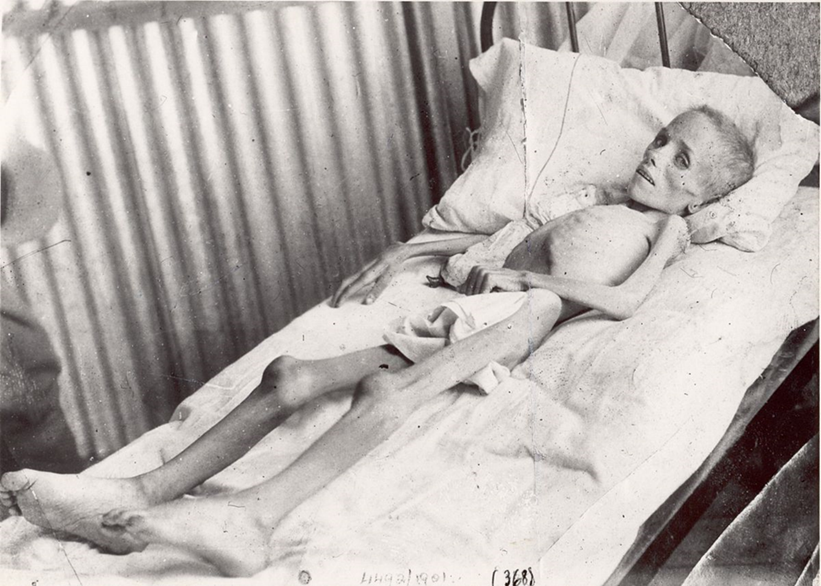
Image 18: Lizzie van Zyl, Bloemfontein camp Hospital, 1901
The image of seven-year-old Lizzie van Zyl (Elizabeth Cecilia van Zyl) showed the skeletal body of a child, a doll lying in her limp arms.[xii] Her eyes are slightly open, as she glanced towards the camera, which created the illusion that she was glancing at the viewer, although too weak to turn her head fully to face the photographer. Her hair had been cut short due to her high fever which was a common practice with children at the time, but it served to make her appearance all the more tragic.[xiii] Lizzie died on the 9th of May 1901 in the Bloemfontein camp hospital due to typhoid fever.[xiv] Treatment for typhoid fever was rudimentary since it was only discovered five years before in 1896, therefore the treatments were only partially understood.[xv] Typhoid fever damaged the patient’s intestines, which meant that patients were put on a diet of milk and eggs, which the Boers were opposed to and thought it deliberate starvation.[xvi] Lizzie was one of seven children, all of whom suffered in the camps. Lizzie’s brother Hermanus Egbert died from Cancrum oris (Noma) which is a gangrene of the jaw and sister Hester Wilhelmina also died from an undisclosed illness.[xvii] Hobhouse viewed Lizzie as the symbol of all the inhumane suffering the Afrikaner children were exposed to.
War photography was still a relatively new practice at the turn of the century but proved a powerful tool. The type of images would have been distressing for average people to see in everyday circulation. Therefore war photography, especially images of suffering victims, have been used as a persuasive argument to side with the those the images represent and condemn those that are responsible for those conditions.[xviii] Philosopher and political activist Susan Sontag pointed out that the challenge with photographs, is that ‘by remembering through photographs [it] eclipses other forms of understanding and memory.’[xix] It is necessary to reiterate that the contemporaries would have reacted to the images in a certain way as today’s views have been coloured by hindsight, other atrocities and perspectives that come after 120 years.
The public or private meaning of images can also give us insight into their true meaning. Some photographs were taken for public circulation, as a report, as evidence and others had private meanings such as the image of a deceased child for the father to see when he returned from the war, or as a final photograph of a loved one. In contemporary society, we are overwhelmed with opportunities to take photographs which can easily be done with a smartphone. Therefore, it is imperative to remember that the people who lived at the turn of the century did not have such a luxury. Therefore, a photograph would have been a prized possession and one of a kind. Which adds to its symbolic meaning for the owner of the photograph.
The proper funerary practices, the expense and trouble arranging a photographer to photograph the deceased also gives us insight into the strong family structures and the importance of family relationships and memory.[xx] As Emily Hobhouse inspected the concentration camps, she was able to witness the lives, and deaths, of the camp inmates. In some cases, after the corpses of children had been prepared for burial, they would have been photographed for the father at war.[xxi] These funerary photographs were meant for private use, however some of the images have taken on a public meaning as they represent the high child mortality rate.[xxii] Many commentators and scholars have noted that the camps provided moral support for the fighting commandos or those in prisoner of war camps, which only increased and became more determined as the suffering of women and children increased.[xxiii] This resolve is the opposite of what Kitchener and other British military leaders anticipated or wanted. In a speech Hobhouse gave, she spoke of witnessing ‘untold sufferings’, however she was moved by the ‘lofty spirit which animated the Childhood as well as the Motherhood of your land’.[xxiv] The inmates were determined not to surrender, even if it cost them more suffering.
Rensche van der Walt, wrote in her journal about finding strength in the suffering and finding God’s greater purpose within those circumstances.[xxv] ‘We do not lament, because the Lord Jesus was a stranger on earth for thirty years, and He has said: Whoever wants to be my disciple, must take up my cross and follow Me. Thus I may not whimper when I have to take up my cross.’[xxvi] This statement displays what the women clung to when the situation in the camps were dire.
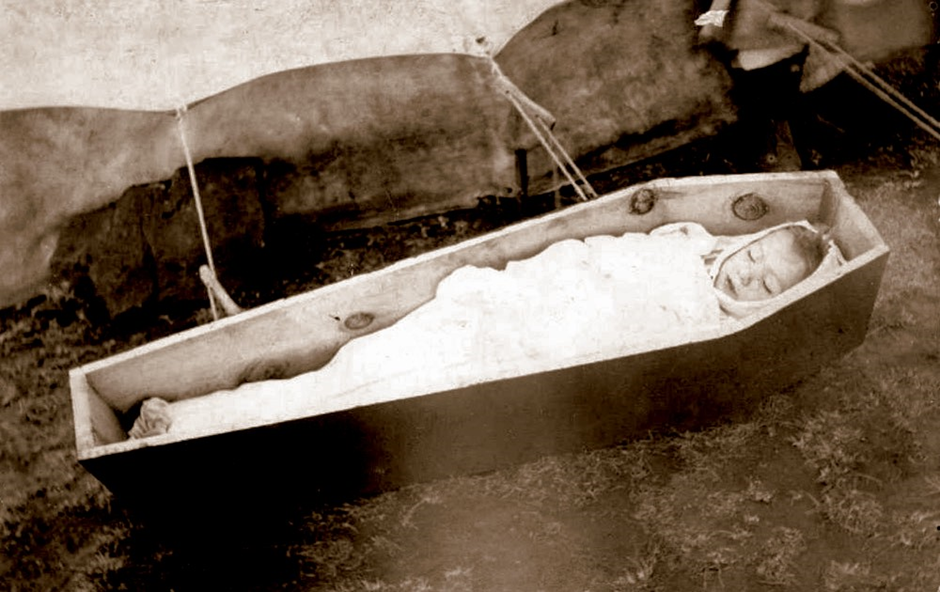
Image 19: Japie Berg, Bloemfontein Concentration Camp
The photograph of Japie Berg is very poignant like the one of Lizzie, but in a different way. Japie was also a victim of Bloemfontein concentration camp. The toddler, wrapped in a blanket seems to be sleeping peacefully, but the tiny coffin makes the reality of his death harder to conceive. Before Japie and his family were interred in the camp, they had lived on a farm while his father fought in the commandos. Shortly before their farm was burned down by British forces, Japie had picked up a small screw which became his only toy and most prized possession in the camp.[xxvii] His health unfortunately deteriorated rapidly in the camp. Before his death, he had entrusted the little screw to his mother, who was to give it to his father who was a prisoner of war at that time so that he can build up their farm again one day.[xxviii] This tale handed down from generations emphasize the youth and innocence of those who died. The story also highlights the patriotic side and the Boers determination to rebuild after the war. Whether little Japie said those exact words to his mother, or whether a version was created to console the father and foster determination to carry on after the war, we cannot be certain. However, little Japie still died.
Chaplain Luckhoff described a deathbed scene he witnessed on the night of 25 September 1901 where he, a nurse and Mrs Van den Berg sat by Lenie van den Berg’s bedside as she lay dying.[xxix] The mother held her child’s hands and comforted her that she must not be afraid, and that Jesus was also there to hold her hand.[xxx] Luckhoff detailed Lenie’s last moments and contemplated the process of dying.
And slowly, gently, those lids sink once more to rest — to rest indeed — for her spirit has fled — perfect peace! How passing strange, how majestic in its simplicity, how weird in its strange stillness — the passing of a Soul — the disunion of Body and Spirit! Is this Death?[xxxi]
– Chaplain Luckhoff
Graphic media, such as the photographs as well as the satirical prints by Jean Veber were used by both sides of the war argument. The family group pictures are harder to discern their hidden meaning. One interpretation is that they were posed and used as British propaganda to illustrate that camps were in a reasonable condition.[xxxii] However, given the character and defiance these women exhibited, it is doubtful that they would have complied with such a task. The most reasonable explanation is that these family portraits were taken to send to the fighting men; either to lift their spirits or to remind them what they are fighting for.[xxxiii]
Certain aspects of the camps were photographed to further one side’s argument. An example of this is the British photographs of the camp layout, or of schoolchildren or the hospital to prove to their superiors that the camps were well run.[xxxiv] These images would have been intended for government officials only. The campaigners, such as Hobhouse, in turn used graphic and unsettling images to alert as many people as possible to the plight of those suffering as well as the horrific conditions.[xxxv]
The increase in refugees and the spread of the disease meant that conditions in most camps deteriorated quickly. The image which is created the fiercest debate on both sides of the war was the photograph of Lizzie van Zyl.[xxxvi] The parties opposing the war used her image to condemn the treatment of women and children in the camp, however, the counterargument was made about the specific date Lizzie and her family were interred in the camp.[xxxvii] The length of time from the date from her admission to that of her death carries significance: If it was a short period, then she entered the camp already partially emaciated, however if she was in the camp for a longer period of time, her condition can be blamed solely on British authorities.[xxxviii] Lizzie’s family was reportedly very poor, therefore the photograph would not have been commissioned by her mother, rather the image of a dying Lizzie in hospital leans towards its use in the public sphere as evidence.[xxxix] Hobhouse knew the Van Zyl family, and Lizzie’s condition was especially impactful. The doll in Lizzie’s arms was a gift from Hobhouse, however she did not commission the photograph, nor used it initially in the public to rouse support for the cause against the war.[xl] Hobhouse did send the photograph to her family in England who were campaigning against the war.[xli] The photograph was not published until after Lizzie’s death in May 1901.[xlii]
British authorities and physician Arthur Conan Doyle attributed Lizzie’s emaciated state to the ‘neglect of her mother’ and not due to the camp conditions.[xliii][xliv] On 1 February 1902, The Daily Chronicle published a letter by Conan Doyle titled The Lizzie Van Zyl Photograph.[xlv] In his letter he stated that he observed that ‘…Miss Hobhouse, in a letter to the Daily Chronicle, throws doubt upon my statement that the child, Lizzie Van Zyl, was the victim of her own mother, rather than of the British authorities.’ The British Government used the photograph to strengthen their arguments about child neglect, and Hobhouse in turn used it to display the conditions of the camp.[xlvi]
Lizzie van Zyl’s photograph may have been one of the first examples where it was used as a symbol against war and further suffering of civilians. Children are and should be viewed by most societies as the ultimate beacon of hope and a future. Childish innocence that is not yet contaminated by the trials of life or worse, horror and tragedy of war, and must be protected at all costs. Lizzie’s photograph may have been the first to be used in this way, but she was certainly not the last. The photograph ‘The Terror of War’ from 1972 shows the 9-year-old Phan Thi Kim Ph’uc, running naked toward the camera from a South Vietnamese napalm attack.[xlvii] This is one of the most memorable images from the Vietnam War and is credited with ending the war movement.[xlviii] These images have the power within them to bring about the change necessary to stop a war. Another powerful example is the photograph of the lifeless body of 3-year-old Syrian refugee Aylan Kurdi in 2015 amid the migrant crisis in Europe.[xlix] The image not only holds tragedy and loss within its corners, but it holds enormous political significance which should be used to bring about the right kind of change.[l]
As the public debates about camp conditions continued, so did the outbreak of epidemics which continued to take more lives. Many local women resorted to nursing the other inmates and became indispensable to the new medical staff when they arrived.[li] Even with extra help at the camp hospitals, epidemics such as typhoid fever still ripped through the camps and claimed many lives.[lii]
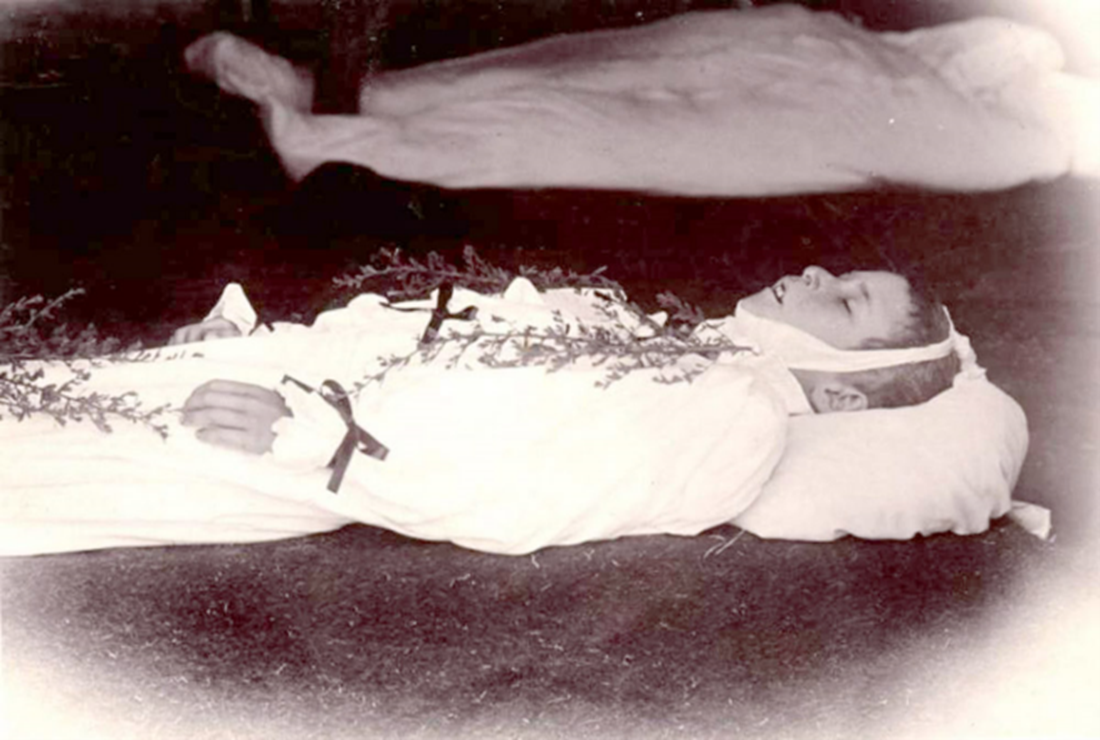
Image 20: Gijsbert Johannes Vermeulen, Bloemfontein Concentration Camp
Gijsbert Johannes Vermeulen died of typhoid fever at the age of 11 in Bloemfontein concentration camp.[liii] Chaplain Luckhoff wrote about the experience of listening to the ill and dying during his stay at Bethulie camp. On the evening of 27 August 1901 he wrote, ‘great coughs; little coughs; deep coughs; shrill coughs; hoarse coughs; long coughs; coughs that are no coughs at all”, listening to the coughs he wondered “how many are to die to-night!’[liv] Luckhoff’s desperation becomes evident as ‘[o]ne longs for day, and the night seems never to end.’[lv]
Bloemfontein camp, Irene camp and Bethulie camp were among the most notorious with the highest death rates.[lvi] The declining situation at Irene concentration camp near Pretoria forced Kitchener to invite the Honorary Consulting Surgeon for the British forces, Dr Kendal Franks to inspect the camp in July 1901.[lvii] Dr Franks was assisted by Dr Neethling who had been with the Boer forces previously.[lviii] This created a balanced view and not one biased in favour of the British. During his visit, Dr Franks found that the women were reluctant to enter the hospital. This reluctance was due to distrust, their fear that they would have to pay for treatment and the fear that they will be starved.[lix] Many patients with typhoid fever were put on a diet of milk and eggs, but many construed this as deliberate malnourishment.[lx] The ‘unsanitary’ customs of the Boers were heavily criticized by the British doctors and used for propaganda purposes to excuse the rising mortality rate.[lxi] However, certain habits such as changing children’s clothes once a week was not unusual for the time, nor was the piling on of bedding when a child’s fever was rising.[lxii]
Scholar of the concentration camps, Dr Elizabeth van Heyningen, believes that many child deaths could have been avoided had inmates taken steps to improve their own cleanliness and accepted new medical advice.[lxiii] The fierce distrust in the British also served the inmates poorly as many did not accept help when it was offered. But after all that had transpired since the start of the war, it was hardly a surprise. The rations were also a contentious issue and lacked protein and vitamins as discussed earlier.
Lieutenant L M Bruce, RAMC, previously quartermaster of the Imperial Yeomanry Hospital became superintendent of Irene concentration camp in January 1902 and under his supervision, Irene was transformed into a model camp.[lxiv] Mortality rates dropped significantly, and fresh mutton and quality vegetables were introduced to the inmates which provided necessary sustenance.[lxv] Due to his medical background, Bruce was unwavering in attention to sanitation. He wrote that he, ‘… view[ed] the Camp more or less, as a large hospital, and as such have given to Sanitary matters particular and unremitting care’.[lxvi] The fact that better management and good diet improved the deathrates implies that many deaths could have been avoided completely had those steps been in place from the start. By the time most camps had become better managed and more habitable, the war was over, and they were finally able to leave.

[i] Smurthwaite, p. 151.
[ii] Smurthwaite, p. 151.
[iii] Britz, p. 35.
[iv] Britz, pp. 26, 35.
[v] Britz, p. 35.
[vi] Britz, p. 35.
[vii] ‘Boer War | National Army Museum’.
[viii] Krebs, p. 39.
[ix] ‘British Concentration Camps of the South African War 1900-1902’ <https://www2.lib.uct.ac.za/mss/bccd/Histories/Bloemfontein/> [accessed 25 February 2022].
[x] ‘British Concentration Camps of the South African War 1900-1902’.
[xi] ‘British Concentration Camps of the South African War 1900-1902’.
[xii] ‘British Concentration Camps of the South African War 1900-1902’ <https://www2.lib.uct.ac.za/mss/bccd/Person/105487/Elizabeth_Cecilia_van_Zyl/> [accessed 6 May 2022].
[xiii] ‘British Concentration Camps of the South African War 1900-1902’.
[xiv] ‘British Concentration Camps of the South African War 1900-1902’.
[xv] ‘British Concentration Camps of the South African War 1900-1902’.
[xvi] ‘British Concentration Camps of the South African War 1900-1902’ <https://www2.lib.uct.ac.za/mss/bccd/Histories/Bloemfontein/> [accessed 5 May 2022].
[xvii] ‘British Concentration Camps of the South African War 1900-1902’.
[xviii] Godby, p. 35.
[xix] Susan Sontag, Regarding the Pain of Others (New York: Picador, 2004), p. 89.
[xx] Godby, p. 38.
[xxi] Godby, p. 36.
[xxii] Godby, p. 37.
[xxiii] Godby, p. 39.
[xxiv] Godby, p. 39.
[xxv] Hamman, p. 62.
[xxvi] Hamman, p. 62.
[xxvii] Monica G. Fernandes, ‘'The War at Home'- Albert Grundlingh and Bill Nasson’ <https://www.academia.edu/25606185/The_War_at_Home_Albert_Grundlingh_and_Bill_Nasson> [accessed 10 May 2022].
[xxviii] ‘Anglo-Boer War Museum’ <https://www.wmbr.org.za/ocmdp/pub_view.asp?pg=photos&pgopt=item&ItemID=7959&txtstr=kinders&conItemID=861> [accessed 29 December 2021].
[xxix] Luckhoff, pp. 44–45.
[xxx] Luckhoff, pp. 44–45.
[xxxi] Luckhoff, pp. 44–45.
[xxxii] Godby, p. 41.
[xxxiii] Godby, p. 39.
[xxxiv] Godby, p. 42.
[xxxv] Godby, p. 41.
[xxxvi] Godby, p. 42.
[xxxvii] Godby, p. 41.
[xxxviii] Godby, p. 41.
[xxxix] Godby, p. 41.
[xl] Godby, p. 43.
[xli] Godby, p. 43.
[xlii] Godby, p. 43.
[xliii] Godby, p. 41.
[xliv] ‘British Concentration Camps of the South African War 1900-1902’.
[xlv] ‘The Lizzie Van Zyl Photograph – The Arthur Conan Doyle Encyclopedia’ <https://www.arthur-conan-doyle.com/index.php/The_Lizzie_Van_Zyl_Photograph> [accessed 11 May 2022].
[xlvi] Godby, p. 43.
[xlvii] ‘Tragic Images of Children Captured by Photojournalists over Time’, Poynter, 2015 <https://www.poynter.org/reporting-editing/2015/tragic-images-of-children-captured-by-photojournalists-over-time/> [accessed 14 March 2022].
[xlviii] ‘Tragic Images of Children Captured by Photojournalists over Time’.
[xlix] ‘Tragic Images of Children Captured by Photojournalists over Time’.
[l] ‘Tragic Images of Children Captured by Photojournalists over Time’.
[li] ‘British Concentration Camps of the South African War 1900-1902’ <https://www2.lib.uct.ac.za/mss/bccd/Histories/Irene/> [accessed 15 March 2022].
[lii] Pretorius.
[liii] ‘British Concentration Camps of the South African War 1900-1902’.
[liv] Luckhoff, p. 11.
[lv] Luckhoff, p. 11.
[lvi] ‘British Concentration Camps of the South African War 1900-1902’ <https://www2.lib.uct.ac.za/mss/bccd/Histories/Bethulie/> [accessed 10 May 2022].
[lvii] ‘British Concentration Camps of the South African War 1900-1902’.
[lviii] ‘British Concentration Camps of the South African War 1900-1902’.
[lix] ‘British Concentration Camps of the South African War 1900-1902’.
[lx] ‘British Concentration Camps of the South African War 1900-1902’ <https://www2.lib.uct.ac.za/mss/bccd/Histories/Bloemfontein/> [accessed 5 May 2022].
[lxi] ‘British Concentration Camps of the South African War 1900-1902’.
[lxii] ‘British Concentration Camps of the South African War 1900-1902’.
[lxiii] ‘British Concentration Camps of the South African War 1900-1902’.
[lxiv] ‘British Concentration Camps of the South African War 1900-1902’.
[lxv] ‘British Concentration Camps of the South African War 1900-1902’.
[lxvi] ‘British Concentration Camps of the South African War 1900-1902’.