
by Simoné Cloete
by Simoné Cloete
The 2nd Anglo Boer War was the first war to be properly photographed which offered many insights into the war’s impact on civilians which had been impossible before. By examining the photographs alongside the satirical prints, we were able to establish that both forms of media had the ability to affect change politically as well as on a humanitarian level.
Mounting political pressure from individuals such as Emily Hobhouse, Melicent Fawcett and the Ladies Commission as well as international pressure, led to the camps being brought up to an acceptable standard and deathrates did decline. The satirical prints by Veber issued direct criticism of the British Army as well as British government and their treatment of civilian women and children. He used motherhood, grief, and traditional chivalry to present the women and children’s case to the French public.
This promoted the Boers cause even more, which became evident when the three Boer Generals were warmly received when they visited France after the Peace of Vereeniging in 1902. The photographs of the children like Lizzie van Zyl offered the tragic reality of high child mortality in the camps and provoked public outcry, which forced measures to be taken to salvage the situation. The photograph of Lizzie also served a greater political purpose, even though it was used and misused by both sides of the argument. Her heart-breaking image was the first of its kind to be used to question the legitimacy of a war or a crisis.
Since then, as war photography evolved, images of children like Phan Thi Kim Ph’uc from Vietnam or Aylan Kurdi from Syria became only some of the examples that have been used to highlight the plight of a people. The photographs and posters and the reality that they represented forced the British and the world to question a civilians’ role in warfare and what measures taken against civilians, especially women and children, are legitimate and which are not.
Numerous justifications were given for the scorched earth policy, the destruction of property as well as the conditions of the concentration camps. However, they do not serve to justify the number of innocent and unarmed civilians who died. As Sir Henry Campbell-Bannerman asked in 1901, ‘When is a war not a war? When it is carried on by methods of barbarism in South Africa.’[i][ii]
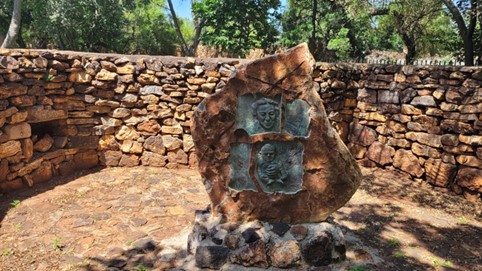
Image 21: Author’s own photograph, Memorial Wall built with rocks from original graves, Irene Concentration Camp Memorial Cemetery, 2022
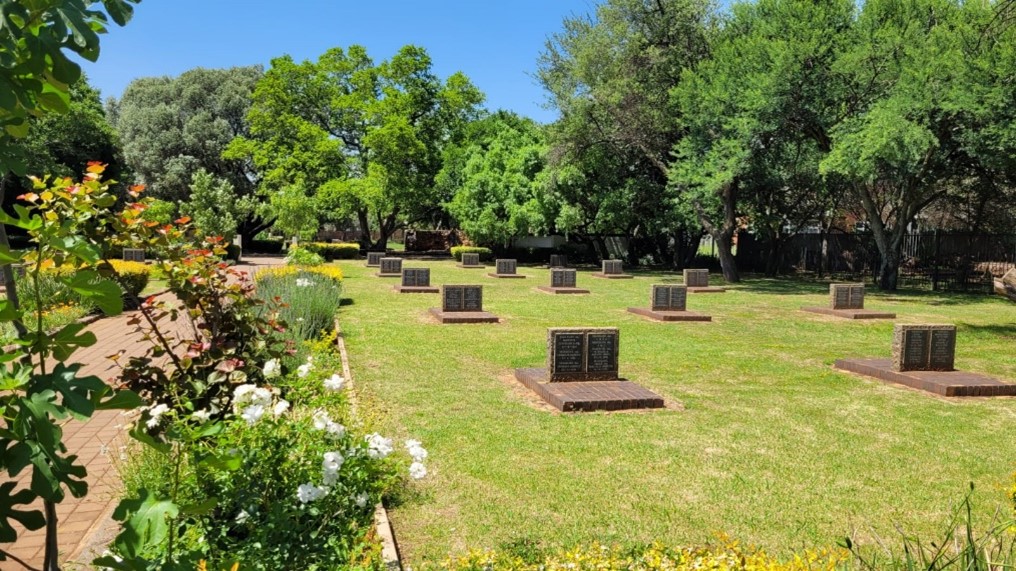
Image 22: Author’s own photograph, Irene Concentration Camp Memorial Cemetery, 2022

There is a time for everything, and a season for every activity under the heavens: a time to be born and a time to die, a time to plant and a time to uproot, a time to kill and a time to heal, a time to tear down and a time to build, a time to weep and a time to laugh, a time to mourn and a time to dance, a time to scatter stones and a time to gather them, a time to embrace and a time to refrain from embracing, a time to search and a time to give up, a time to keep and a time to throw away, a time to tear and a time to mend, a time to be silent and a time to speak, a time to love and a time to hate, a time for war and a time for peace.
– Ecclesiastes 3:1-8
[i] Judd and Surridge, p. 11.
[ii] ‘On This Day 14-6-1901 – Liberal History’.