
by Simoné Cloete
by Simoné Cloete
Nu wil ik hier schrijven die ik nooit moet vergeten zoo lang ik leef.
Now I want to write it down so that I will never forget as long as I live. [i]
– Rensche van der Walt
23-year-old Rensche van der Walt (1878-1948), was an inmate at Bethulie camp in the Orange Free State.[ii] Her diary entries give insight into the minds of the women who experienced the tragedy of the camps themselves, while Veber’s illustrations capture the essence of the words written. He took the evidence of mortality rates and disease epidemics and moulded it into his interpretation of what the women, especially the mothers’ endured. Rensche recalled the suffering she witnessed and specifically referenced the final months of 1901.[iii]
We will never forget the days of August and September 1901, and October, November and December — those months when we were more dead than living. O, we still see the many corpses buried each morning and afternoon — and all the children ….[iv]
Her anguish echoes through the ages at the loss of life, but specifically the children. Veber published his response to the conditions in September 1901.[v]
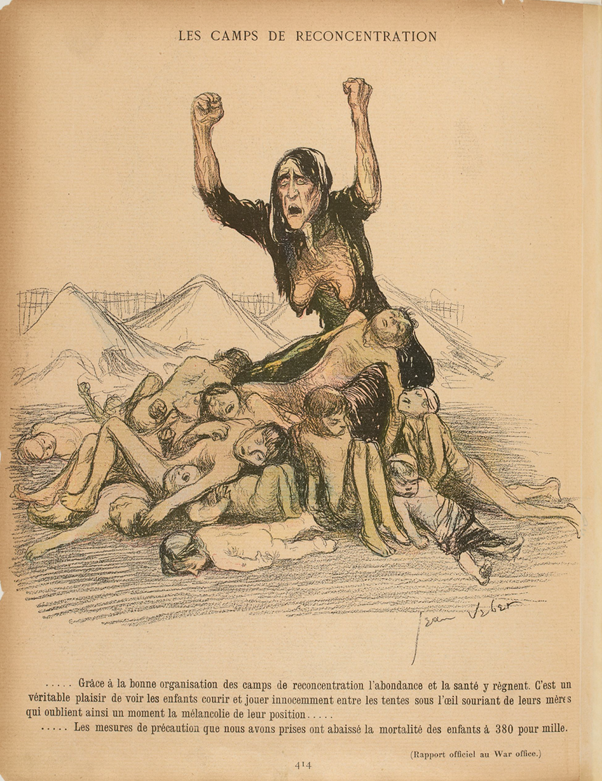
Image 15: Woman with raised arms Poster, Jean Veber, ‘L’Assiette au beurre’, 28 September 1901
‘Thanks to the good organization of the reconcentration camps, abundance, and health reigns. It is a real pleasure to see the children running and playing innocently between the tents under the smiling eyes of their mothers who thus for a moment forget the melancholy of their position. The precautionary measures we have taken have reduced child mortality to 380 per thousand.’
Veber used emotive and religious imagery and composition to make his work impactful. The central woman is surrounded by the dead or dying bodies of twelve children. She represents all mothers and has her arms and fists raised in the air in utter helplessness and hopelessness. Her eyes are filled with horror and her mouth wails in pain. A dead child is laid on her lap with others surrounding them, ribs exposed from malnutrition. Chaplain Luckhoff noted that ‘…one grows so weary of scenes of suffering and sorrow; always red and tear-stained eyes; always Love, helpless, hopeless, impotent, despairing; always face to face with Decay, Change, Death; always the same close, stifling, little tent.’[vi]
The poster’s text highlights the innocence of the children who should be playing, not dying from disease as their mothers helplessly look on. The mothers had no ‘smiling eyes’ as the children suffered.[vii] The woman’s breasts are exposed and empty and symbolise womanhood, motherhood, nutrition and fragility or exploitation. Veber also satirized government announcements and how reports of the terrible situation was conveyed in a positive light to the public.
On 1 September 1901, Chaplain Luckhoff noted his response to the women’s experiences.[viii] ‘For the very essence of sorrow and misery, come here! For weeping, wailing mothers, come here! For broken hearts, come here! For desperate misery and hopelessness, come here!’[ix]
Veber’s imagery also appealed to the French public by using well known French symbolism that would immediately lead the viewer to draw the right conclusions. In French culture, a bare-breasted woman has long been associated with the symbol of freedom. Eugene Delacroix’s Liberty Leading the People shows Marriane as the central figure with her arm lifted in the air carrying the flag of her nation.[x] The French critique of the British was aimed at their treatment of women and children seen as innocents but also at their freedom being attacked. In Delacroix’s masterpiece, Marianne is also surrounded by bodies of the dead. The stark difference is that they were all men or young adolescents who had a weapon against their enemy. Even Marianne carries a weapon in one hand and the flag of her nation in the other. The central mother in Veber’s poster has no weapon, nor do the small children that surround her. She is utterly defenceless which makes the treatment and violation they suffered all the worse.
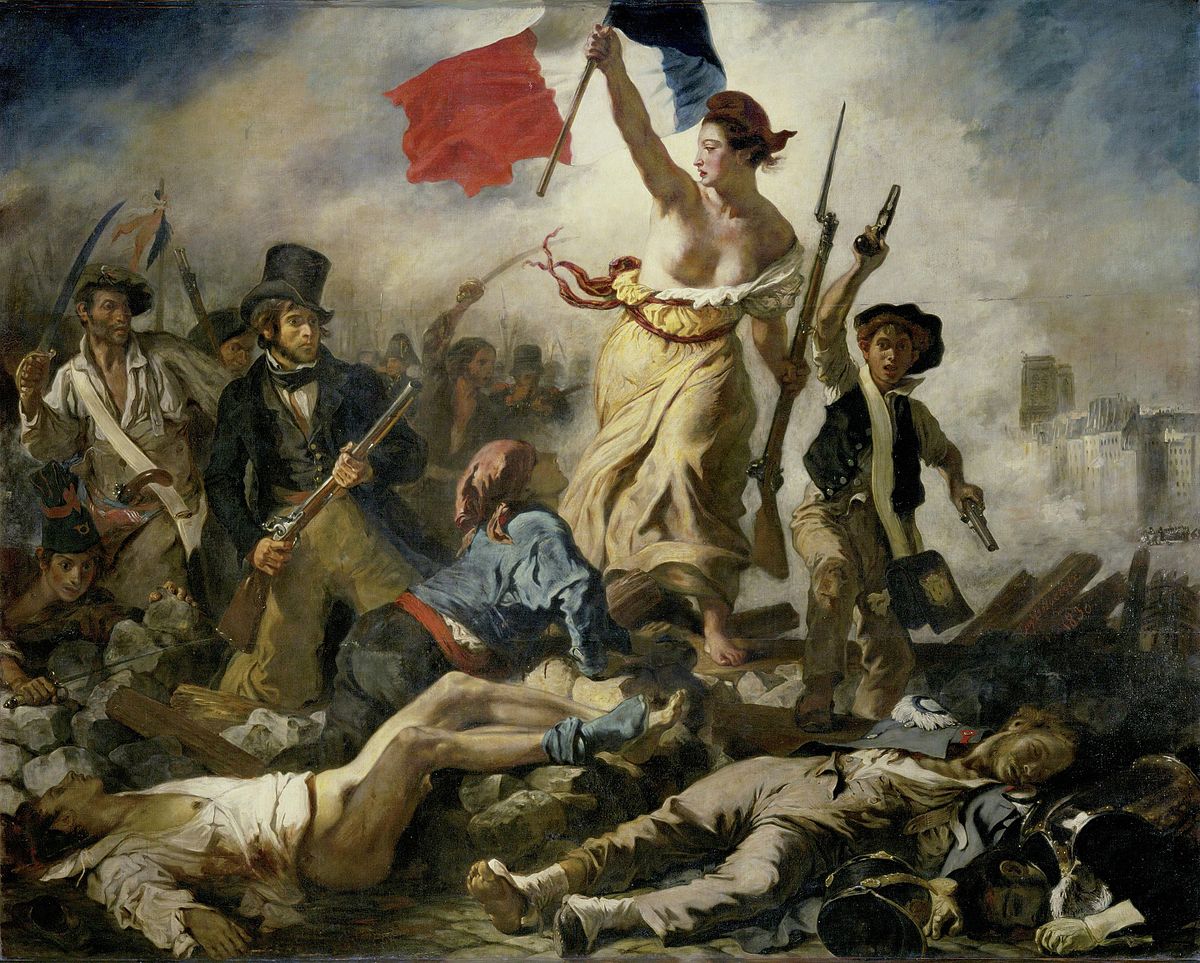
Image 16: Liberty Leading the People by Eugène Delacroix, Louvre Museum, 1830
Veber’s poster also alludes to Mary with the body of Jesus Christ on her lap. The Pieta (1497 – 1499) by Michelangelo can be described as serene, beautiful, exquisite and there is an eternal sorrow in Mary’s expression. It was commissioned by a French cardinal for his tomb in Old St Peter’s Basilica.[xi] The triangular formation of subjects places the focus almost entirely on the woman’s facial expression. Mary is depicted as serene and at peace with the fate of her beloved son. The mother in Veber’s print has no such peace about the death of her children, nor any beauty or redemption. The Afrikaner people were devout Christians descended from French Huguenots and Calvinist Christians escaping Europe.[xii] They would have therefore believed in heaven and eternal salvation, but the loss of a child remains the greatest kind of loss anyone can suffer. Their loss didn’t serve an eternal purpose as the death of Jesus Christ did for Mary or humanity. Therefore, the mothers in the camps could not find comfort as Mary, in the Pieta, could.
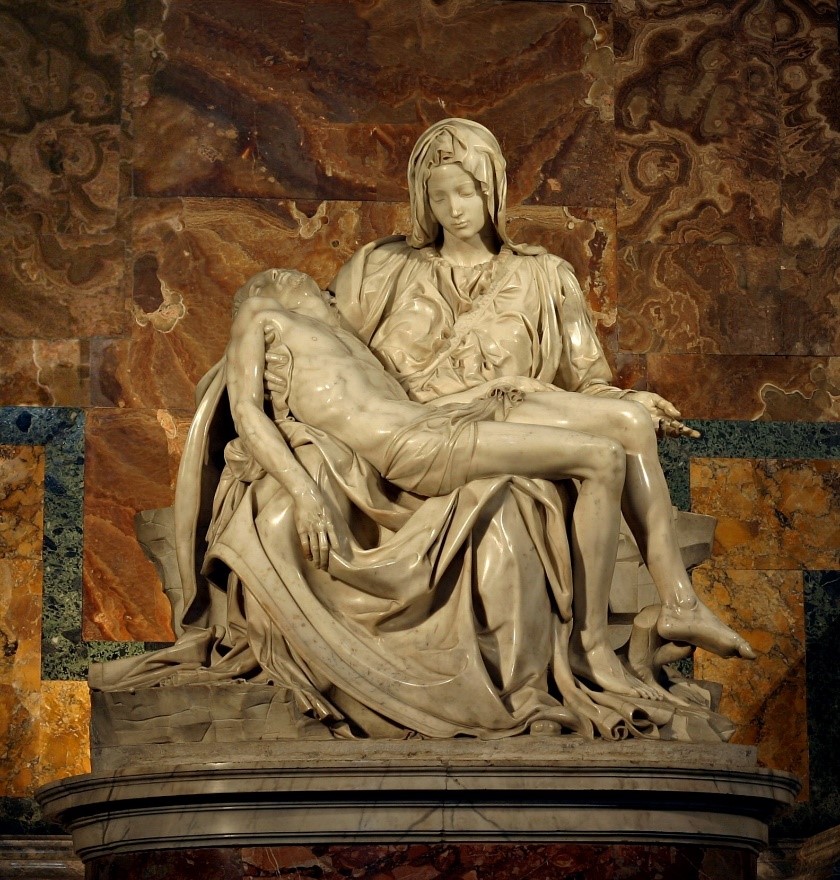
Image 17: Pietà by Michelangelo in St. Peter’s Basilica, 1498–1499
The death figures did not go unnoticed in British High Command. ‘This whole thing has been a sad fiasco’ were the words British High Commissioner in South Africa Sir Alfred Milner used to describe the high death figures in concentration camps in December 1901.[xiii] In his report to Colonial Secretary Joseph Chamberlain, Milner reluctantly admitted that the high mortality rates were not only due to the sudden influx of refugees when the camps were open, but the continuation of high death rates suggest that the whole system of camps had been a mistake.[xiv]

[i] Dagboek van ’n Bethulie-Kampdokter, ed. by Kezia Hamman (Bloemfontein: NG Sendingpers, 1965), p. iv.
[ii] Britz, p. 26.
[iii] Hamman.
[iv] Hamman, p. 88.
[v] Veber.
[vi] ‘The Project Gutenberg EBook of Woman’s Endurance, by A.D.L., B.A., Chaplain In The Concentration Camp, Bethulie,.’ <https://www.gutenberg.org/files/16859/16859-h/16859-h.htm> [accessed 12 May 2022].
[vii] Veber.
[viii] Luckhoff, p. 16.
[ix] Luckhoff, p. 16.
[x] ‘Liberty Leading the People: Delacroix and Coldplay | DailyArt Magazine’ <https://www.dailyartmagazine.com/liberty-leading-the-people/> [accessed 12 May 2022].
[xi] ‘Pieta Michelangelo Sculpture’ <https://www.michelangelo.net/pieta/> [accessed 5 January 2022].
[xii] Smurthwaite, pp. 12–13.
[xiii] Kreienbaum, p. 2.
[xiv] Kreienbaum, p. 2.